
Spring is a season of renewal and rejuvenation. As the days grow longer and the temperatures rise, nature awakens from its winter slumber, bringing forth vibrant blooms and lush greenery.
Spring is also a great time to review your personal finances and ensure your plans are still on track. We have 3 months until the end of the year.
- Review your budget, mainly to ensure you’re aware of the cost of your December holiday and how much you have available – no more surprises in January.
- Consolidate and pay down debt – use the debt snowball to get rid of that pesky debt that is constantly keeping you in shackles.
- Create goals for the last 3 months of the year, focusing on how much you need to save, achieving a debt-free December, and increasing your retirement investments. Just get it done.
Why you don’t need to be #1 every year to win
When it comes to investing, many people believe success means always backing the number one fund or the hottest stock. But history shows the opposite: you don’t have to be the best every year to end up at the top over the long run.
Howard Marks, co-founder of Oaktree Capital, explains this concept clearly: consistent good results, without major blow-ups, usually beat occasional brilliance.
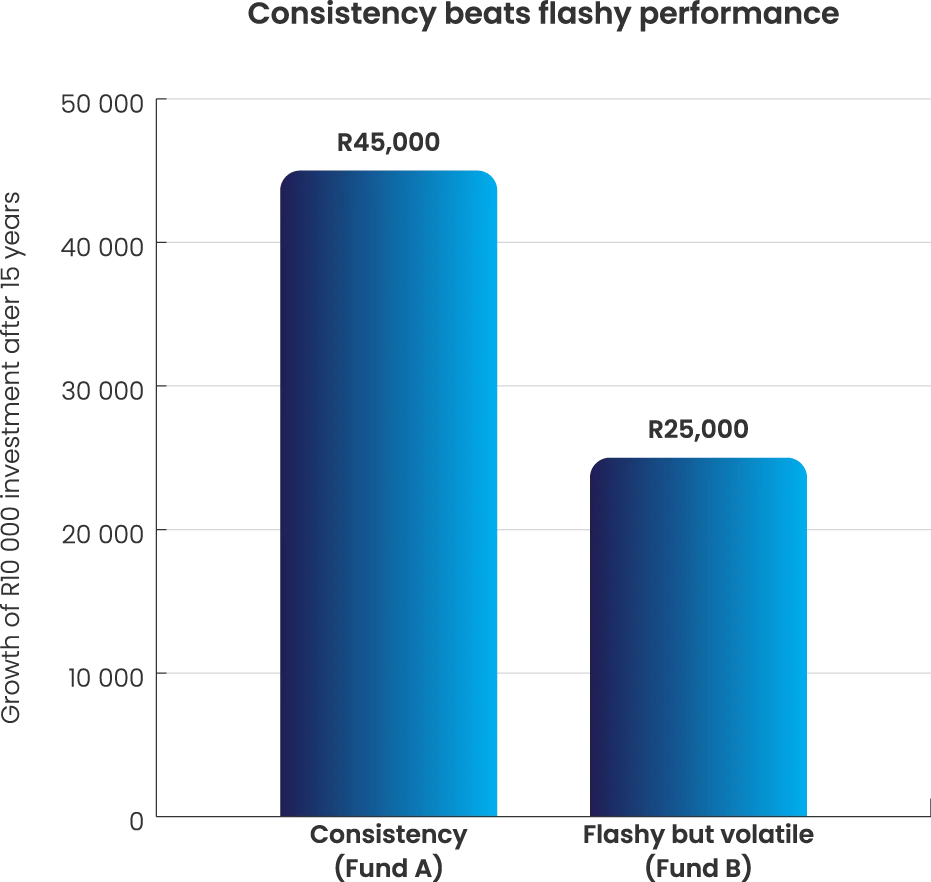
Let’s compare two imaginary funds:
- Fund A: Rarely number one, but always in the top 25% over 15 years.
- Fund B: Number one in a few years, but near the bottom of the top 25% in other years.
Over time, Fund A ends up in the top 1% of all funds, while Fund B lags behind.
This lesson applies to individual investors, too. Chasing last year’s top-performing fund often backfires. Research from Morningstar shows that the average investor underperforms the funds they invest in, simply because of poor timing – buying high and selling low. Add switching costs, transaction fees, and tax, and the gap widens even further.
Think of investing like sports. The best teams don’t need to blow out their opponents once in a while. They win steadily, week after week. That steady record puts them at the top of the league table over time.
What this means for you:
- Stop chasing the “winner of the year.”
- Look for consistency, not headlines.
- Stick with your plan so compounding can work its magic.